Scattered across institutions
Photographs, maps, manuscripts and documents are held separately by each institution. Every catalogue is its own island, so a search in one place never sees what the others hold.
Search, explore and license photographs, maps, manuscripts and historical documents — gathered from archives, museums and libraries across the country into a single union catalogue.
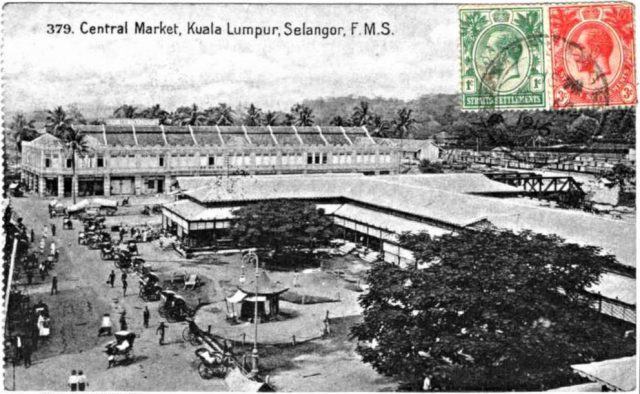
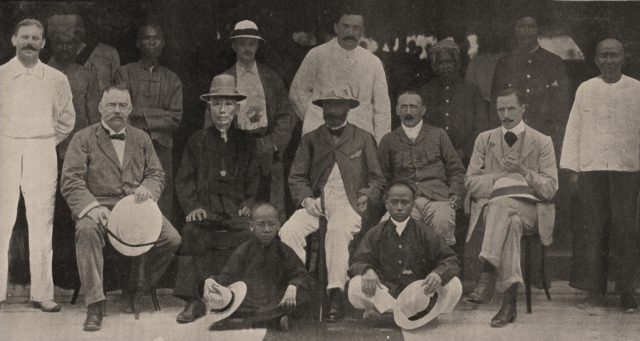
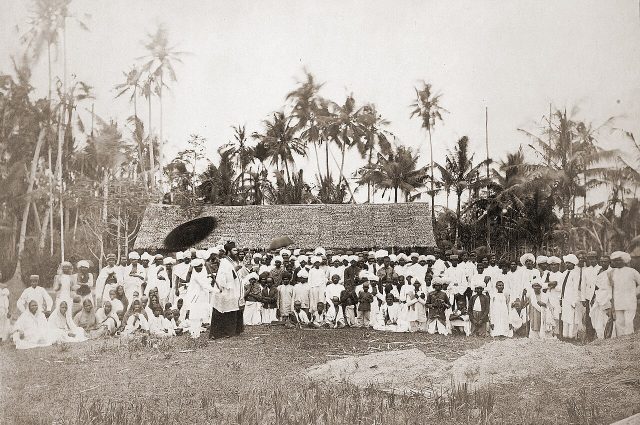
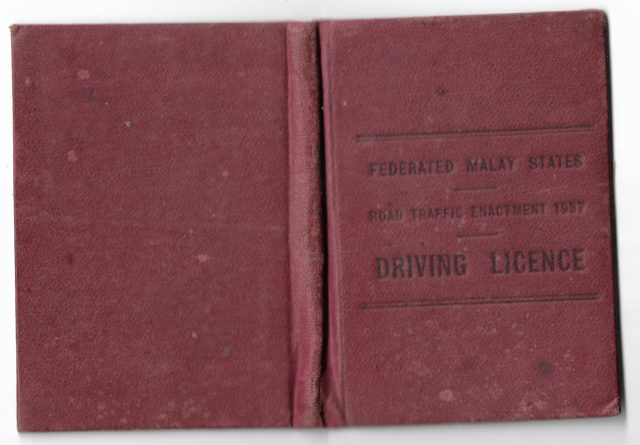
The nation's heritage images are already preserved — carefully, and at cost — inside archives, libraries and museums. What is missing is a single way in, and a lawful way to pay for use.
Photographs, maps, manuscripts and documents are held separately by each institution. Every catalogue is its own island, so a search in one place never sees what the others hold.
Someone looking for an image of a town, a building or a period has no single place to look — and often no way to know which institution holds it, or under what rights.
Without an official way to license usage, publishers and agencies go without or use images informally — and the institution that preserved the image sees no return.
Records from every contributing institution are consolidated into a single search. Institutions retain full ownership of their own collections.
Choose licence type, resolution, usage scale, territory and term — the price is calculated automatically, with the licence agreement and e-invoice issued alongside it.
Licensing revenue is distributed to the owning institution under a revenue-sharing agreement, with periodic royalty statements and payouts.
Every record carries its accession number, holding institution and rights status. Previews are watermarked; the master file stays outside the web root until a licence is purchased.
Institutions submit collections by OAI-PMH harvesting, API or direct upload — and retain full ownership of everything they contribute.
Records are described to national and international metadata standards. AI assists with the description; a human cataloguer verifies and approves it.
The public searches by keyword, then narrows by institution, decade, subject, material type and rights status — and examines the image in deep zoom.
The price is calculated from the chosen terms, the e-invoice and licence agreement are generated, and the full-resolution master is delivered by secure link.
Revenue is distributed to the owning institution, which receives periodic royalty statements and payouts.
In this preview, payment, e-invoicing and royalty distribution are simulated.
Free search across every contributing institution, with full descriptive metadata, provenance and deep zoom for close reading.
A price known up front, a licence agreement, a valid e-invoice, and a full-resolution master file — instead of guesswork about who owns what.
National reach for collections that are hard to find, own rights status and pricing per collection, and a share of the licensing revenue.
One consolidated view of the nation's image holdings, described to open standards, with rights status and a licensing trail per transaction.
Public previews are low-resolution and visibly watermarked. The full-resolution master is stored outside the web root and released only after a licence is purchased.
Right-click, drag, select and save-image are disabled; the Print Screen key is cleared; content is hidden when the window loses focus.
An invisible ownership signature (DCT) is embedded in the pixels. It survives screenshots and re-saving, and can be detected again to prove the source.
Screenshots cannot be blocked 100% on the web — no browser can stop the system Print Screen key, a screen-capture tool, or a phone camera pointed at the screen. Layer 02 is a deterrent, not an absolute barrier.
No watermark is truly “AI-proof”. The invisible signature makes clean removal difficult — attempts to strip it tend to damage the image — and it stays detectable after a screenshot. That is a robust defence, not a guarantee. The real strength is detection and provenance: even from a screenshot, the KIIK mark can identify the source image.
Core descriptive metadata carried by every record.
Photo and rights metadata embedded in the file itself.
Interoperable image viewing and deep zoom across institutions.
Metadata harvesting inbound from and outbound to other catalogues.
Rights status recorded on every record; licensing terms stated in writing.
Personal data protection and data minimisation for licensee records.
Valid e-invoicing issued with each licence purchase.
Public Domain
Public Domain
Public Domain
Public Domain
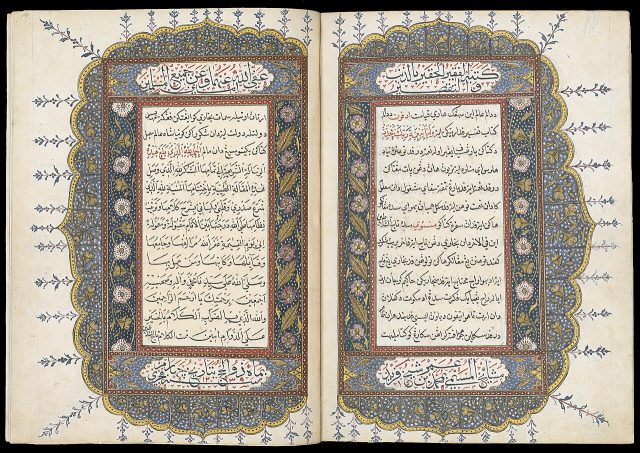 Reference Only
Concept prototype: images are drawn from public domain collections and assigned to illustrative institutions only — not official holdings or endorsements.
50,015 records from 29 contributing institutions — searchable by keyword, institution, decade, subject and rights status.
Browse the collection → How it works